Why mobile & after-hours
Access is the difference between knowing and wishing you knew
The skills are the same everywhere. The schedule is what keeps people out. Helping Hands was built around that single insight.
Nobody should trade a paycheck for a lifesaving skill
Hourly and shift workers often cannot attend a Tuesday-at-2pm class without losing income. Evening and weekend sessions remove that cost entirely.
Students stay in class
Teens and young adults can get certified on a Saturday or after school instead of being pulled out of the classroom.
Caregivers can actually attend
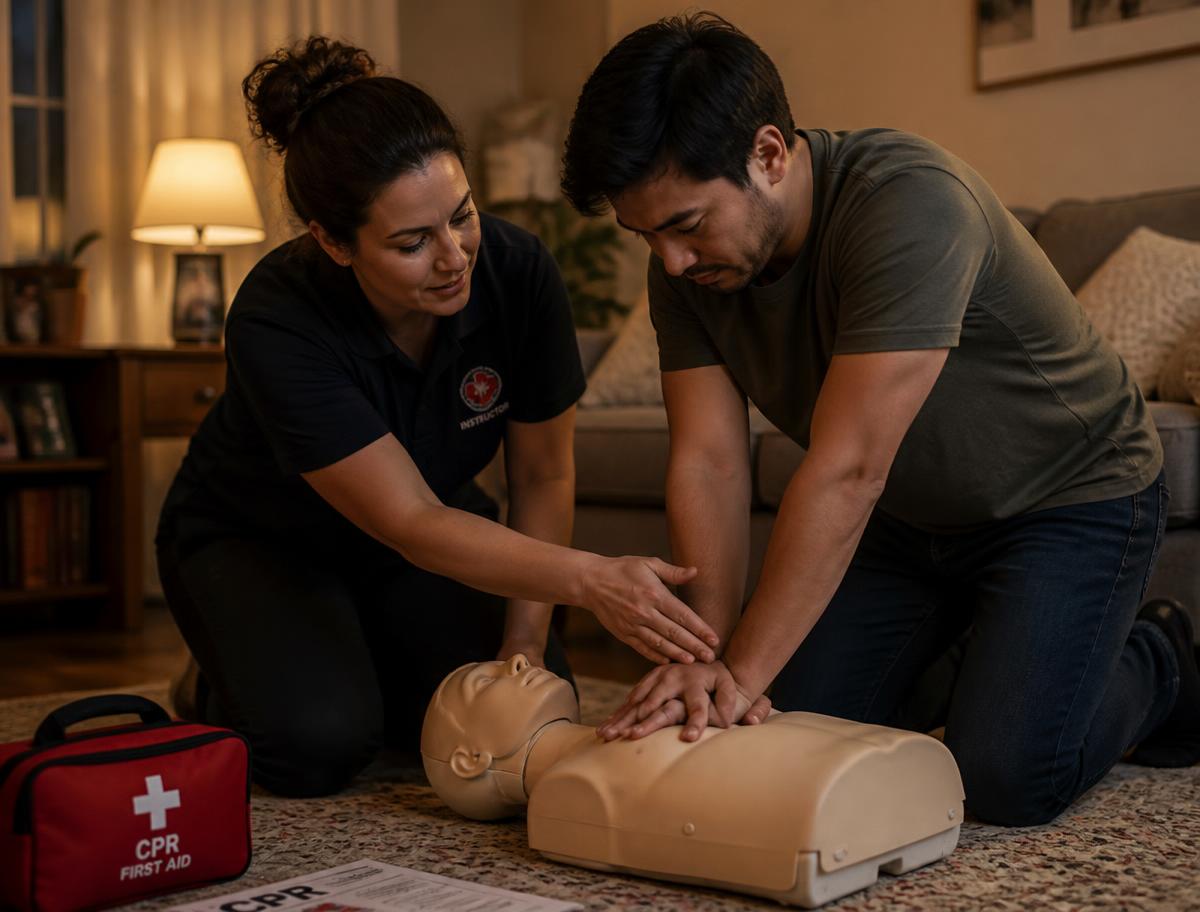
We train in your home, so childcare and eldercare responsibilities are not a barrier. Family members can learn together.
Transportation is not a gatekeeper
If a training center is a two-bus trip away, distance decides who gets trained. We remove the trip.
Familiar spaces build confidence
People ask more questions and practice more freely in their own kitchen, break room, or fellowship hall than in an unfamiliar facility.
Preparedness should be spread evenly
Bystander CPR training has historically reached some neighborhoods far more than others, even though communities with less access often face higher risk of serious cardiac and other medical emergencies. Going to those communities on their own terms helps close that gap.
Our commitment to how we teach
- We teach in plain language, without jargon, and we welcome every question — including the ones people are embarrassed to ask.
- We describe emergencies in practical terms, not frightening ones. The goal is readiness, not anxiety.
- We treat every group as capable. Communities are not problems to be fixed; they are partners in preparedness.
- We are transparent about cost, and we look for sliding-scale or sponsored seats when price is the obstacle.